
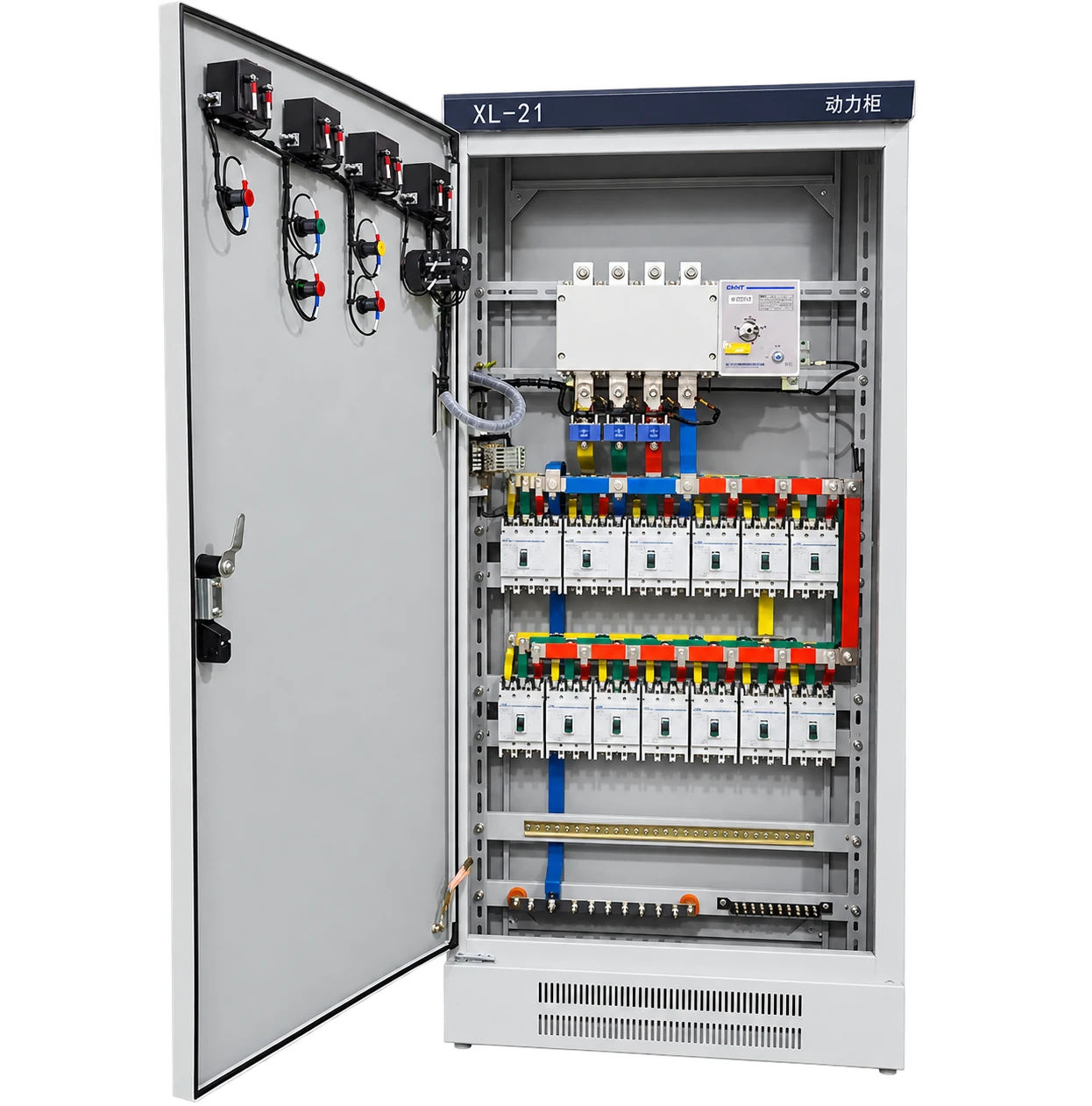









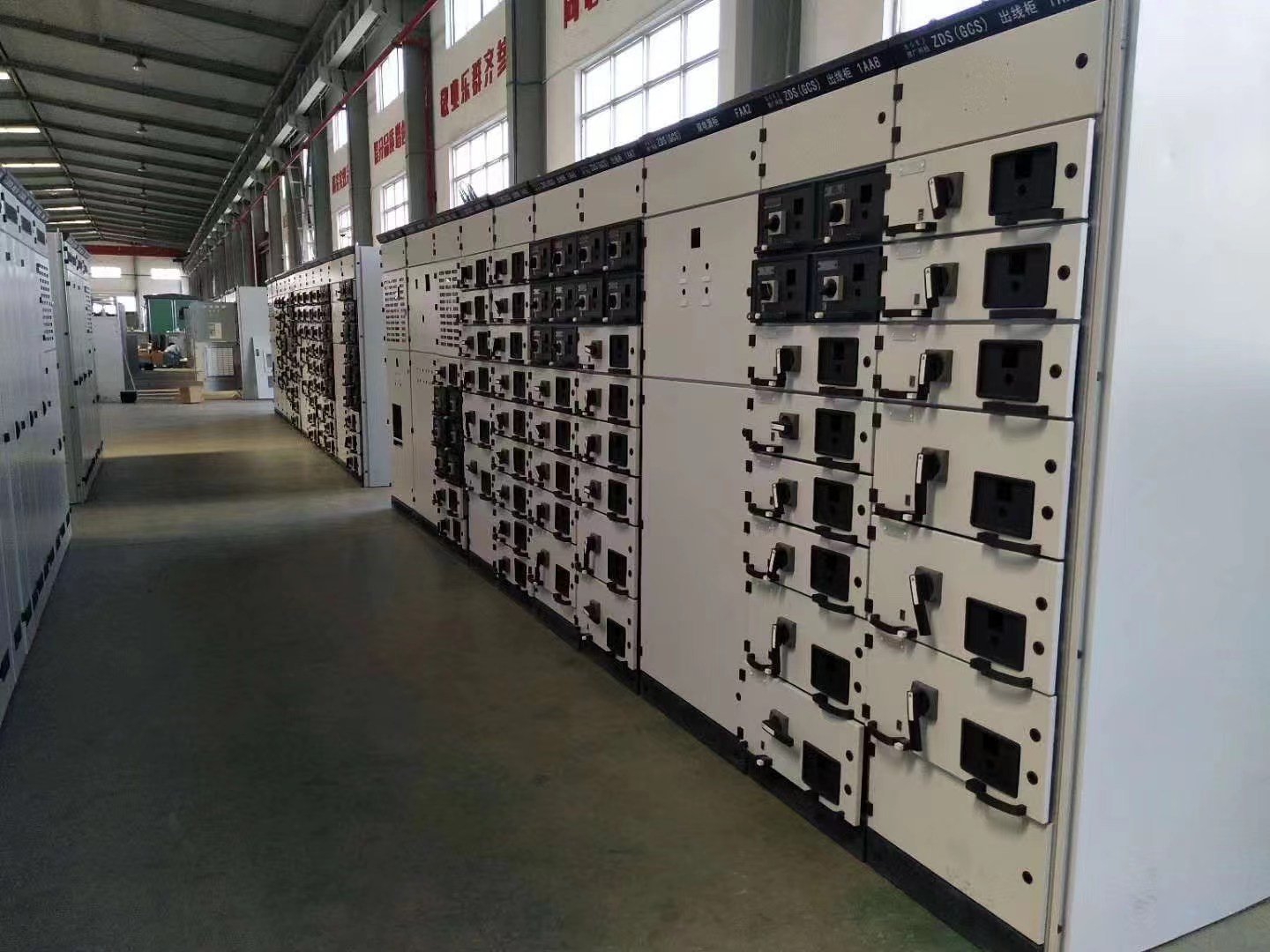
Product overview
An ATS panel monitors available power sources and transfers the connected load according to an approved operating sequence. The correct design depends on the number of sources, switching arrangement, neutral treatment, generator signals, transfer timing and critical-load requirements. Zejiefu develops the panel around the submitted sequence of operation and single-line diagram.
Configurable engineering scope
- Two-source or project-specific transfer arrangement
- ATS device or interlocked breaker configuration
- Automatic, manual and test operating modes
- Voltage monitoring, time delays and generator start signals
- Mechanical and electrical interlocking with status indication
Typical applications
- Emergency and standby power distribution
- Commercial buildings and public facilities
- Industrial critical loads and utility systems
- Data and communications rooms under the approved design
Information required for quotation
- Normal and standby source ratings
- Load current and short-circuit level
- Three-pole or four-pole switching requirement
- Transfer sequence and timing requirements
- Generator interface and remote monitoring points
Standards, drawings and inspection
The applicable IEC standard, routine inspection scope, drawing format and project documentation must be confirmed against the technical specification. Ratings and compliance statements are not assumed before engineering review. Approved general-arrangement drawings and component schedules form the basis for production.
Application solutions and RFQ guidance
Commercial standby-power applications | Critical-load distribution
Before requesting a configuration, review the SLD and BOQ preparation guide.
BOQ and RFQ are different documents
For procurement terminology and document responsibilities, read BOQ vs RFQ for electrical switchgear projects.
ATS sequence information to include in the RFQ
| Input | Details required |
|---|---|
| Power sources | Normal, standby or generator source voltage, current and fault level |
| Switching arrangement | ATS device or interlocked breakers, three-pole or four-pole requirement |
| Transfer logic | Source priority, failure thresholds, time delays, open or closed transition if specified |
| Generator interface | Start signal, available signal, cool-down logic and responsibility boundary |
| Manual operation | Manual, test and bypass requirements plus safe operating interlocks |
| Remote interface | Status, alarms, communication protocol and points list |
Coordinate critical loads and downstream equipment
The transfer sequence should consider downstream motor restarting, inrush current and process requirements. Where grouped motor loads are involved, coordinate the sequence with the MCC motor control centre and the approved control narrative.
Use the SLD and BOQ RFQ guide and the IEC 61439 procurement checklist when issuing the enquiry.
Industrial transfer panels and ATS assemblies
An industrial transfer panel is commonly specified as an automatic transfer switch panel or an interlocked-breaker transfer assembly. The correct arrangement depends on the normal and standby sources, rated current, fault level, neutral switching requirement, transfer sequence and generator interface.
For motor or process loads, the sequence should also address restart timing, inrush current and permissible interruption. Show both sources and the essential-load section on the SLD and BOQ package.
200 A and 800 A automatic transfer switch enquiries
For a 200 A ATS panel or an 800 A automatic transfer switch assembly, the requested current is only the starting point. Supply voltage, frequency, fault level, pole arrangement and switching duty must also match the project. These current values are enquiry examples, not a statement of stock or a blanket rating for every panel.
| Enquiry input | What changes the panel selection |
|---|---|
| Requested current | State the required current, such as 200 A or 800 A, and the load duty. The selected device and complete assembly ratings must be confirmed. |
| Poles and neutral | State the required three-pole or four-pole arrangement and the designer’s neutral and earthing requirements. |
| Power sources | Identify utility and generator, two utility supplies or another approved source arrangement, including each source rating. |
| Transfer and interfaces | Provide source priority, delays, generator start and available signals, alarms and remote-control requirements. |
| Installation and maintenance | Confirm cable entry, termination space, IP requirement and whether a maintenance bypass needs separate review. |
Generator automatic transfer switch panel price
Compare the complete panel scope rather than the price of a transfer device alone. The quotation should identify the switching device or interlocked breakers, controls, enclosure, internal connections, terminals and agreed inspection documents. Any bypass, metering or remote interface should be identified separately when requested.
To request a generator ATS panel price, send the normal and standby source ratings, load schedule, pole requirement, transfer sequence, quantity and destination. Confirm whether the supply includes the panel only or any additional site work. Prices and availability are established after the configuration is reviewed.
Coordinate generator transfer with motor loads
Where the generator supplies drives or grouped motors, confirm the restart sequence and interface responsibilities with the VFD control panel or MCC panel scope. State what interruption the load can tolerate; an ATS enquiry does not by itself imply uninterrupted power.
Planning an inverter-backed installation? Read our solar automatic transfer switch installation and configuration guide for source compatibility, protection and project information.