
Two quotations for a 200 kVAr APFC panel can describe quite different equipment. The largest differences may sit in the component brands, the compensation method and the reactor arrangement. Whether the panel uses discrete components or integrated smart-capacitor modules also affects the work involved in building and maintaining it.
Start by asking each supplier to identify these choices. A total capacity and a cabinet photograph are not enough to establish that two proposals cover the same requirement. This guide uses 200 kVAr only as a comparison example, not as a recommended capacity or a priced project.
1. Check which components the quoted brand actually covers
In our quotation experience, brand selection is one of the first things to clarify. An approved international-brand specification and a proposal using specialist Chinese components may carry substantially different equipment costs. The comparison becomes useful when the bill of materials names the actual manufacturer and model for each major item.
Check the capacitor units, reactors, switching devices, controller and incoming protection separately. If an SVG is included, identify its manufacturer and model too. A familiar name on the incoming breaker does not tell you who makes the compensation equipment inside the cabinet.
Chinese manufacturers offer more than unbranded substitutes. Their published ranges include dedicated capacitors, switching devices, controllers and integrated compensation modules. For example, Hengyi lists conventional integrated capacitors and reactor-equipped modules; Zhiyue publishes manuals for plug-in smart capacitors and harmonic-suppression modules; and Tysen-KLD lists capacitors, reactors, composite switches, thyristor switches and SVG equipment.
These examples demonstrate available product approaches. For a quotation, request the proposed components' data sheets and applicable documents rather than judging their suitability from a brand name or product category alone.
2. Establish whether you need capacitors, SVG or a hybrid arrangement
The compensation method changes what you are buying. A switched capacitor bank adds or removes capacitor stages. An SVG uses power electronics to adjust reactive-current output. A hybrid proposal combines electronic compensation with capacitor stages, so its price depends on how much duty is assigned to each part.
In the projects we encounter, SVG has been particularly relevant to fast-charging sites, and its initial equipment cost is generally higher than conventional capacitor compensation for a comparable nominal duty. We therefore treat it as a response to a defined site requirement rather than the default upgrade for every APFC enquiry.
For a charging site, useful inputs include the charger's operating range, site measurements at different utilisation levels, reactive-power behaviour and any separate harmonic requirement. Charging equipment can itself include an active power-factor-correction front end, as illustrated by TI's EV-charging power-conversion reference designs. The label “fast-charging station” alone does not establish the external compensation requirement.
International suppliers also offer electronic and hybrid approaches. Schneider's AccuSine EVC+ is an electronic VAR compensation system; its PFC technical catalogue describes capacitor, electronic and hybrid arrangements. These are different technical choices, not simply different brands of the same capacitor cabinet.
For the wider selection process, see our APFC panel selection guide.
3. Compare the reactor requirement before comparing totals
A plain capacitor proposal and a detuned reactor-capacitor proposal are different scopes. Reactors add equipment and heat that must be accommodated in the assembly; they also require the capacitor and reactor to be selected as a coordinated combination.
Ask the supplier to state whether reactors are included, the selected detuning factor, the matched capacitor specification and the compensation output at the project voltage and frequency. Describe the site conditions and provide available measurements so the selection has a technical basis.
For overseas orders, check frequency explicitly. Some Chinese module data sheets are for 50 Hz systems. For example, Hengyi's published reactor-equipped HY module specifies 50 Hz with a stated operating range of 45–55 Hz. That particular published specification is not evidence of suitability for a 60 Hz project. Ask for a confirmed selection at the actual supply conditions, including the reactor-capacitor combination.
Our guide to when an APFC panel needs detuned reactors explains the review inputs and the difference between detuning factors.
4. Compare installed cost: discrete parts or an integrated module?
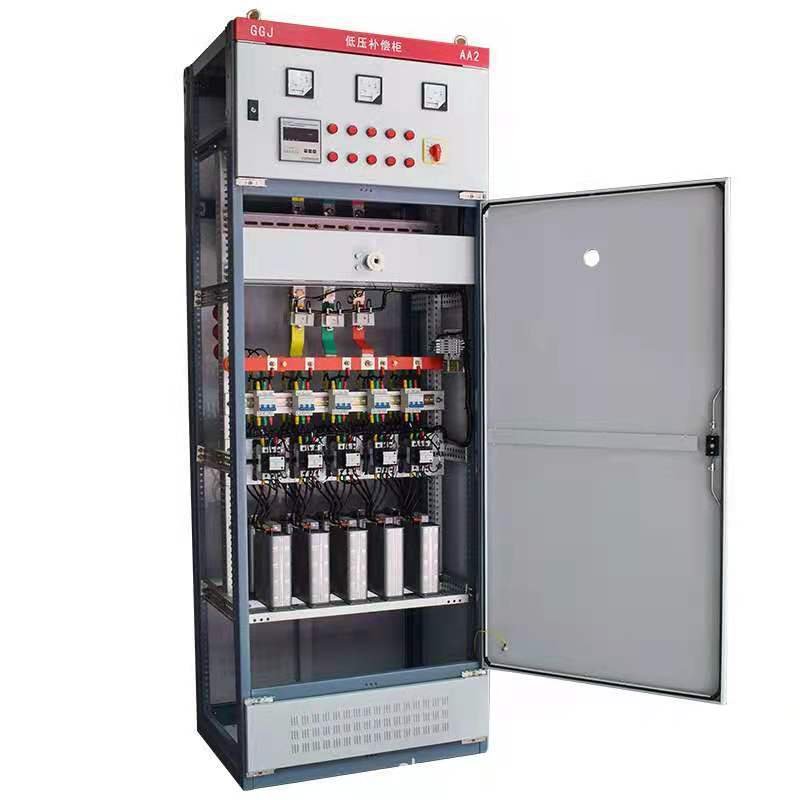
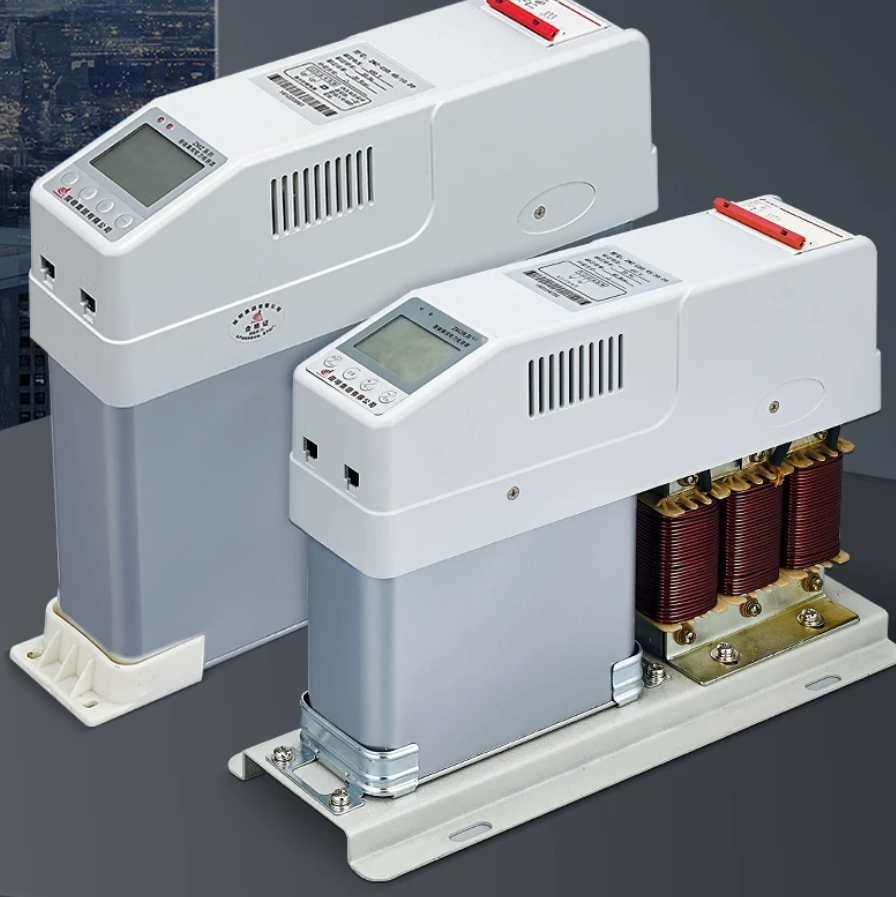
A smart-capacitor label does not automatically mean a more expensive finished cabinet. In the configurations we work with, an integrated arrangement may reduce separate mounting, interconnections and assembly work enough to make the complete proposal economical. The outcome depends on the actual components and the project; there is no universal saving percentage.
Keep two questions separate:
- Does this application require a reactor?
- How are the selected capacitor, switching, control and protection functions packaged?
A plain integrated capacitor and a reactor-equipped integrated module are different products. Hengyi publishes these as separate product ranges, while Zhiyue's manuals likewise distinguish smart capacitors from harmonic-suppression modules.
Ask what remains outside the module. A compact unit may still need a compatible supervisory controller, incoming protection, busbar connections and a coordinated thermal arrangement. For maintenance, compare the replacement unit, access space, controller compatibility and spare-part availability. Discrete construction can allow individual components to be replaced; integrated construction can simplify module replacement. The more economical choice depends on both assembly and service arrangements.
“Smart capacitor bank” can also describe a complete cabinet with diagnostics and connectivity. Schneider uses the term in that cabinet-level sense in its PowerLogic PFC brochure. Ask for the internal component schedule before treating similarly named products as equivalent.
5. Identify the switching device and the remaining supply scope
For capacitor-based proposals, record whether the supplier offers capacitor-duty contactors, composite switches or fully electronic switching. Tysen-KLD explicitly separates composite switches, described as thyristor-and-magnetic-latching devices, from its thyristor-switch range. The two names should not be used interchangeably.
The presence of an international brand elsewhere in the panel does not settle this choice. ABB's MNS2.0 catalogue lists capacitor compensation arrangements and notes that a zero-crossing composite switch can be separately selected. An assembly incorporating a component is not evidence that the assembly brand manufactures that component.
Then compare the stage sequence, minimum step, balanced or phase-by-phase compensation, enclosure and ventilation, cable interfaces, drawings, inspection records, packing and freight. These details belong in the offer, particularly where two suppliers have interpreted an incomplete specification differently.
Use the following table to identify those differences before choosing a supplier.
| Comparison item | Project requirement | Proposal A | Proposal B | Question to resolve |
|---|---|---|---|---|
| Supply voltage and frequency | Are both selections for the actual supply? | |||
| Compensation duty | Capacitors, SVG or hybrid? | |||
| Major component makes and models | Which manufacturer supplies each item? | |||
| Reactor and matched capacitor | What combination and output are proposed? | |||
| Stage sizes and phase control | Are minimum steps and control duties comparable? | |||
| Switching arrangement | Contactor, composite or electronic switching? | |||
| Discrete or integrated construction | What external parts and assembly work remain? | |||
| Cooling and enclosure | Which ambient conditions and access space apply? | |||
| Replacement and spares | What is replaced if a component or module fails? | |||
| Documents and inspection | Which records cover the proposed equipment? | |||
| Packing, freight and exclusions | What is outside the quoted price? |
Download the blank quotation comparison checklist (CSV)
6. Ask for a clarified offer before negotiating the final price
Send both suppliers the same requirement and ask them to mark assumptions and exclusions. If one offers a specialist Chinese integrated module and the other offers discrete international-brand components, request enough detail to compare the actual functions and supply scope. A lower total can come from a different design or assembly method; an omitted requirement can also produce an apparently attractive price.
If the capacity is still provisional, start with our APFC capacitor-bank sizing guide. To discuss a proposal, send the required brands, voltage, frequency, target compensation and available site data with the quotation you want clarified. Review our APFC capacitor-bank configurations and send your project requirements.